
Abdirahman’s Optimism
My name is Abdirahman. I am 34 years old, born under the silver light of a full moon in one of the oldest surviving residential buildings on the East African coast—a coral-stone house in Lamu Old Town. This is one of the residential areas that has stood the test of time, with some buildings surviving for more than three centuries.
The walls of our house were made from porous coral blocks quarried from the reefs, reinforced with mangrove poles and finished with lime plaster. I still remember its massive front door, elaborately carved with lotus flowers, chains and geometric rosettes. The door reflected the identity and status of my grandfather, a respected dhow captain involved in Indian Ocean trade.
He was among the prominent people who connected Africa with Arabia, India and Persia, exchanging ivory and mangrove timber for Persian carpets, Indian spices and Arabian dates.
Our house stood shoulder-to-shoulder with those of our neighbours along the narrow, winding streets of Lamu Old Town. The streets were often frequented by people riding poorly saddled donkeys. From the flat rooftop, we enjoyed the cool Indian Ocean breeze, carrying the scent of salt and marine life.
My parents were devout Muslims of mixed Arab-Swahili descent. I was told that they named me Abdi after my great-grandfather, the first person in our family line to be born on African soil after the family dhows dropped anchor permanently.
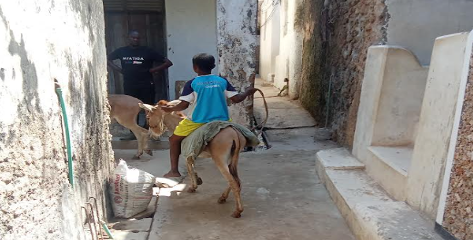
Figure 1: Traditional coral-stone architecture reflecting the cultural heritage and coastal identity of Lamu.
Childhood, Faith and Life by the Ocean
From the age of five, I attended a madrasa beside the Friday Mosque, which stood close to the ocean. Seated on woven mats, I learned Arabic, Islamic law, morality, and the recitation and memorisation of the Qur’an. Sometimes the lessons were held at the mosque, while at other times they took place in the shaded courtyards of our teachers.
I loved the rhythm of poetry, but I loved the ocean even more, although I did not fully understand why. Perhaps it was the endless blue colour or the cool sea breeze. After lessons, I often slipped away to the mangrove creek, listening to songs and stories from people who knew how to cast nets, read the tides and catch crabs.
I remember the old men teasing me:
“Poetry will not fill your stomach, Abdi. Perhaps you should learn fishing or boat-building.”
There was little pressure in life then. We still had the coral-stone house, and the ocean provided fish for dinner.
The Land Dispute That Changed Everything
Then a land dispute struck our family like a sudden squall at sea. Our neighbour claimed to be the rightful owner of the land on which our home stood. We defended ourselves both in and out of court, but the purported owner continued drawing unexpected advantages in the case, one after another.
Eventually, the government demanded a title deed that our family had never previously needed. One morning, a letter was nailed to our carved wooden door. We were ordered to leave the island for the mainland, driving what felt like the final nail into our family’s coffin.
The neighbour claiming ownership of the land paid us KES 20,000 to start life elsewhere. Reluctantly, the six of us packed our belongings—the Qur’ans, cooking pots and my grandfather’s trading log—onto a dhow and crossed to the mainland, where distant relatives lived.
We were initially accommodated in a temporary house before being given a small space on which to construct our own shelter. We later heard that our empty coral house had been sold to a European conservation enthusiast, who converted it into a boutique guesthouse.
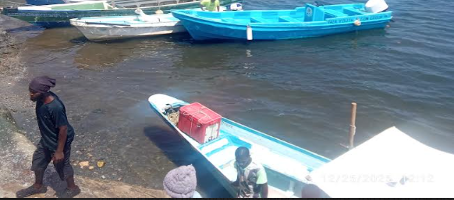
Figure 2: The contrast between historic coral-stone residences in Lamu Old Town and the fragile housing conditions experienced by displaced families on the mainland.
Poverty on the Mainland
My father struggled to construct a reed-thatched structure for the six of us. This became our new home. He returned to his former fishing activities as poverty became our constant companion. Secondary education was a distant dream because the nearest school required fees that we could not afford.
My mother washed clothes for low-income neighbours to supplement the family’s income. Meanwhile, the proceeds from the sale of our former land on the island enabled those who had displaced us to purchase motorboats. They began ferrying tourists from the airstrip to the Old Town and gradually joined the middle class. Their children attended primary school and later enrolled in colleges in Mombasa and Nairobi.
All we could do as a family was watch from the mainland as their motorboats roared past.
By the age of twelve, my arms were strong, but my hunger remained. Each dawn, I helped push our battered canoe into the creek to fish for snapper and barracuda. During the afternoons, I sat under a thorn tree with a cheap notebook, writing nostalgic verses in Kiswahili and Arabic.
I wrote about the trade winds that had once filled my ancestors’ sails, the carved door that no longer opened for us, and the sea that belonged to everyone and no one.
The coral house now welcomed paying tourists. Sometimes, when the evening breeze carried the distant sound of boats across the channel, I stood on the mainland shore and felt the weight of two worlds: one of coral stone and ancient verses, and the other of hunger and memory.
The Loss of My Father
At the age of sixteen, I still rose before the call to prayer, fished when the tides allowed, and recited the Qur’an and poetry whenever the words came. I was expected to join my father in fishing, although by then he was working for someone else.
In 2001, he developed chronic pneumonia after suffering from medicine-resistant tuberculosis for six years. With his health severely deteriorated, my father—the sole breadwinner of our family—did not survive.
His death was sudden and left me without anyone to look up to. My mother had no formal education. She preferred that her four children attend madrasa rather than formal school because madrasa education was nearly free and available close to our home. Government schools, in contrast, required fees and involved travelling long distances.
My eldest sister, who was eighteen years old, left for Lamu Island one day and did not return for several days. We later received information that she was living there and working as a waitress in one of the restaurants.
I considered becoming a beach guide and taking tourists around the island for tips. However, I soon realised that the work required strong connections with tourism companies and fluency in English or Italian. I was automatically unqualified. I had no experience transporting or guiding visitors. All I knew were Kiswahili, Arabic, the ocean and the tiny house my father had built for us before his death.
Frustration and Recruitment into Extremism
When the National Rainbow Coalition government took power, it began fulfilling its pledge to provide free primary education. Yet I could not imagine returning to school and beginning from the first level. I already felt too old, and my immediate needs demanded urgent solutions.
Instead of returning to school, I joined young men of my age in the neighbourhood. They constantly spoke about their frustrations—the inability to purchase basic necessities, attend school or even eat properly at home. Despite these hardships, they always seemed to find money for marijuana, alcohol and khat.
I related to them better than anyone else because their struggles reflected everything I was experiencing as a young teenager.
One of them told us about a recruiter who could give us work to “frustrate” a particular bus company operating between Lamu and Nairobi. The recruiter’s agent exploited our poverty and frustration, feeding us extremist claims that non-Muslims were responsible for our suffering, had taken away employment opportunities and did not deserve to live.
We did not meet the recruiter directly. His agent told us that our role would be to stop buses as they crossed through Boni Forest and attack travellers who were not Muslim. The crew would then demand money before allowing the bus to continue its journey.
The offer was attractive to an impoverished young man—KES 17,000 per month, together with other benefits and money collected from travellers moving to and from Lamu. To a youngster like me, this was a fortune. It was enough to persuade me to join the militia and live in the forest.
We received weapons and basic training before being sent to carry out attacks. I worked in a team of six, setting up temporary roadblocks along the highway, stopping buses and forcing passengers to identify themselves.
Innocent people lost their lives during these attacks. It did not happen once or twice. I hated seeing the bodies of innocent travellers lying beside the road, but at the time I hated my poverty and hopeless existence even more. I tried to convince myself that I had to continue, whether the violence reflected my true beliefs or not. I had entered that life voluntarily, but under deeply desperate circumstances.
A Narrow Escape and a Change of Direction
Eventually, an alarm was raised, and our activities became major television headlines. We were labelled Al-Shabaab terrorists, and the news spread rapidly.
One day, I left the forest to buy soap. I met one of my old friends, who invited me for a conversation in a nearby eatery. While there, I saw a television headline reporting that five Al-Shabaab militants had been killed by the Kenya Defence Forces along a road connecting Kilifi and Lamu through Boni Forest.
Five militants. I immediately knew that they were probably the other members of my team. All of them were dead.
The news sent chills down my spine. From that moment, I lost every desire to return to the forest and continue attacking innocent motorists. I feared that someone might follow and execute me because they believed I carried important information about the militia.
In reality, I knew very little. I had been recruited only as a foot soldier. Our leaders lived in camps deeper inside the forest and were rarely directly involved in the attacks.
Terrified by the fate that had befallen my companions, I returned to the Lamu shoreline and began selling sweets using the small amount of money I had saved. However, I continued wishing for something bigger—something that could bring real purpose and meaning to my life.
I called an old friend and explained how I felt. He told me there was little he could do because I lacked formal education and practical skills. I could not work as an artisan or secure employment in a restaurant. Fortunately, one of his friends offered to train me to operate a motorboat so that I could assist in refuelling boats along the shore.
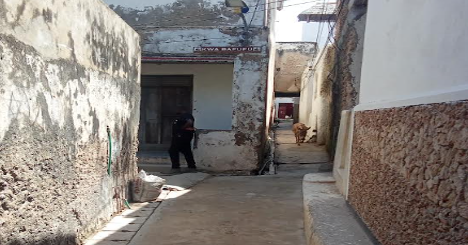
Figure 3: Motorboat operations along the Lamu coastline, providing alternative livelihood opportunities for local young people.
A New Life on the Lamu Shore
Today, as a former member of one of the region’s most feared extremist groups, I see life differently through my motorboat-refuelling work.
I watch wastewater flowing from tunnels on the island and turning the ocean water green. I dislike the pollution, but it has become part of everyday life. I visit the narrow streets of the Old Town, climb to the rooftops of the museum and watch motorboats moving across the ocean.
I have made new friends who are helping me navigate coastal life more productively. I still return to the mainland to spend time with my small family. For the first time in many years, I feel there is something worth living for.
I have also enrolled as an apprentice in motorboat repair under one of the local artisans. I am more confident than ever before, and I have learned to appreciate life.
Affordable Housing Program: A Game Changer?
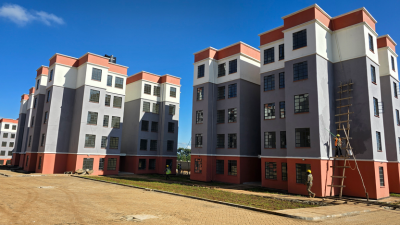
What interests me most these days is the affordable housing project being developed on the Lamu mainland. The project is progressing faster than I expected and could become a major game changer for the people of Lamu.
My hope is that it will help prevent young people from suffering a fate similar to the one I experienced. I expect it will allow homeless and struggling families from both the island and the mainland to live more decently instead of relying on ageing coral-stone structures, some of which date back to the nineteenth century.
I also believe the development provides an opportunity to free the waters surrounding the island from the constant discharge of untreated sewage.
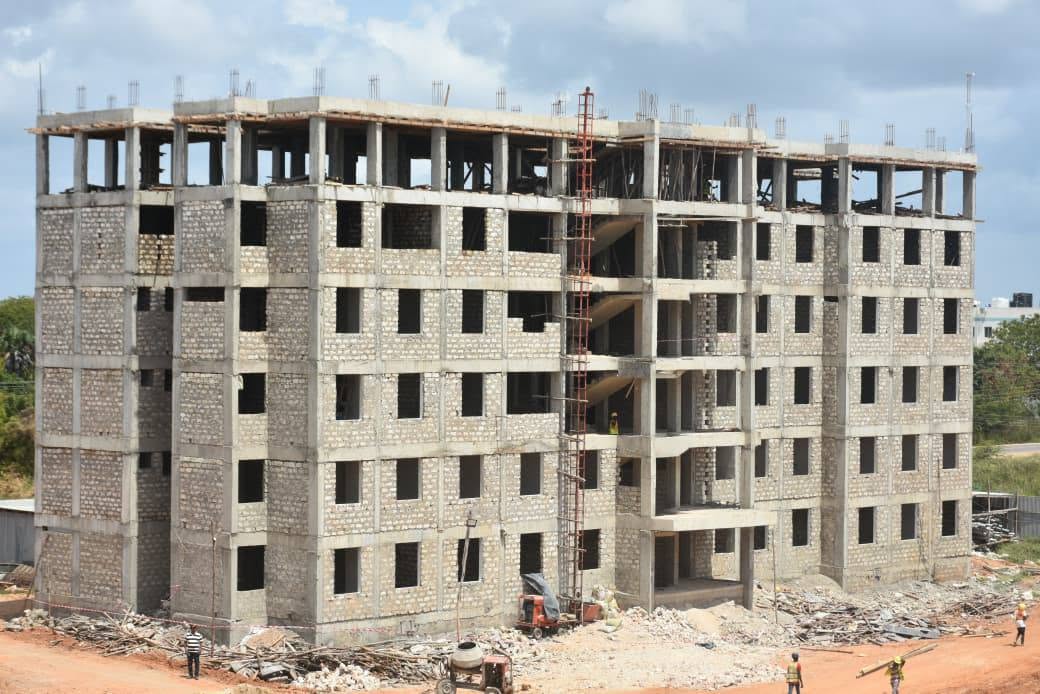
Figure 4: Emerging affordable housing development on the Lamu mainland and its potential to improve living conditions for low-income households.
Affordable Housing and the Protection of Lamu Heritage
I see affordable housing as an opportunity to support the conservation of Lamu’s heritage. Some residents of the Old Town could voluntarily relocate to suitable affordable housing units, reducing overcrowding and pressure on the historic buildings.
This could enable parts of the Old Town heritage site to be conserved and managed more effectively as a cultural and tourism destination rather than remaining an overcrowded residential area that must accommodate modern population pressures without adequate infrastructure.
However, many Old Town residents have limited capacity to pay for new housing because of persistent poverty and low household incomes. The government could therefore consider directing a portion of the tourism revenue generated from the Old Town towards subsidising ownership or occupancy of the new housing units.
Such an arrangement could reduce the financial burden placed on low-income households whose earnings remain insufficient to meet substantial housing payments.
Creating Opportunities for Future Generations
I anticipate that the affordable housing units will be supported by modern sewage systems, better healthcare facilities and improved access to formal education aligned with mainstream economic opportunities.
Through such improvements, future generations will have an opportunity to begin their lives under better conditions, gain access to legitimate economic opportunities and become far more resistant to recruitment by terrorist and extremist groups like the one that once drew me into violence.
Hope, Redemption and Optimism
At thirty-four, I still rise before the call to prayer. I fish when the tides allow and write poetry whenever the words come.
The coral house with its lotus-carved door now welcomes paying tourists, while I stand on the mainland shore feeling the weight of two worlds—one of coral stone and ancient verses, and the other of hardship, poor choices and hard-won redemption.
Yet today, unlike the frightened and desperate teenager I once was, I look towards the future with optimism. My life demonstrates that poverty, displacement and exclusion can push vulnerable young people towards destructive choices. It also demonstrates that practical skills, dignified work, housing, education and social support can help them find their way back.


Comments
Join a constructive discussion about the evidence, methods and implications.
The Lamu context is particularly interesting because development also has to be balanced carefully with the protection of its unique cultural heritage. If affordable housing is accompanied by proper sanitation, education, skills development and genuine livelihood opportunities, it could make a meaningful difference to families who have been excluded from those opportunities for generations. The final reflection on how dignified work, housing and social support can help vulnerable young people rebuild their lives is especially powerful.